Carnosine & Longevity
Growing older is a natural part of life, but scientists are increasingly interested in understanding the biological processes involved in ageing and how we might support healthy ageing.
Carnosine, a naturally occurring compound found in the human body, has attracted scientific interest because of its antioxidant properties and its ability to interact with certain compounds associated with cellular ageing.
Researchers are investigating whether these properties may have implications for health and longevity, although more human studies are needed before firm conclusions can be drawn.

How Does Carnosine Relate To Ageing?
Ageing is a complex biological process involving gradual changes in our cells and tissues. Two processes that scientists study in relation to ageing are oxidative stress and glycation, both of which can affect how proteins and other important molecules function.
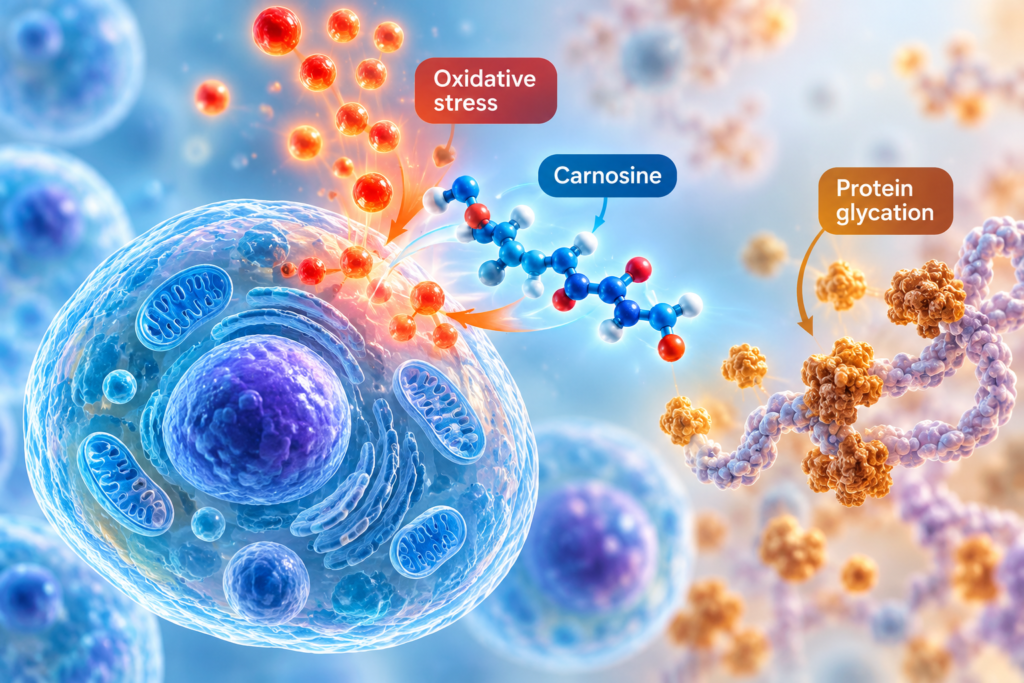
Carnosine has attracted research interest because of its antioxidant properties and its ability to react with certain compounds involved in glycation. In laboratory studies, these properties suggest that carnosine may help protect some cellular components from chemical damage.
Researchers are investigating whether these effects could have implications for healthy ageing. However, much of the evidence comes from laboratory and animal studies, and there is currently insufficient evidence to conclude that carnosine supplementation slows ageing or extends lifespan in humans. However, the research is on going and promising.
Carnosine And Cellular Protection
One reason scientists are interested in carnosine is its ability to interact with certain reactive molecules that can affect cells and tissues. Oxidative stress occurs when reactive molecules overwhelm the body’s protective systems, potentially contributing to cellular damage over time.
Another area of research is protein glycation, a process in which sugars react with proteins and can lead to the formation of compounds known as advanced glycation end products (AGEs). Laboratory studies suggest that carnosine may interact with some of the reactive compounds involved in these processes, although its protective effects in humans have not yet been firmly established.
Carnosine, Muscle Function And Healthy Ageing
Carnosine is naturally present in skeletal muscle, where it plays an important role in helping muscles manage changes in acidity during physical activity. By acting as a buffer, carnosine can help muscles cope with the increased demands of intense exercise.
As we grow older, maintaining muscle strength, mobility and physical independence becomes increasingly important. This has encouraged researchers to investigate carnosine’s role in muscle function and whether it may have wider relevance to healthy ageing.
Although research into muscle carnosine and exercise performance is well established, its potential contribution to healthy ageing is still being explored. There is currently insufficient evidence to conclude that increasing carnosine levels slows the ageing process or prevents age-related muscle decline.
What Does The Research Tell Us?
Laboratory studies have explored how carnosine interacts with reactive compounds associated with oxidative stress and protein glycation. These findings have attracted scientific interest because both processes are involved in changes that occur in cells and tissues over time. However, results from laboratory experiments do not necessarily translate into the same effects in the human body.
Human studies have also investigated carnosine and related approaches, including their possible effects on exercise performance, metabolic health and certain age-related conditions. Some findings are encouraging, but studies differ in their methods, participant numbers and outcomes, making it difficult to draw firm conclusions. However, current research is promising.

Explore Carnosine Further
Our understanding of carnosine continues to develop as scientists investigate its potential roles in cellular health, muscle function and the ageing process. While many questions remain unanswered, ongoing research is helping to build a clearer picture of this naturally occurring compound.
Explore our Research & Articles page to discover more about the scientific studies, emerging findings and questions surrounding carnosine.